POLITICS
Ballot Under Siege: How Excessive Court Rulings Threaten Nigeria’s Democracy – Goodluck Jonathan
Published on Tue 11 Aug 2026 By Temilola Odeniyi

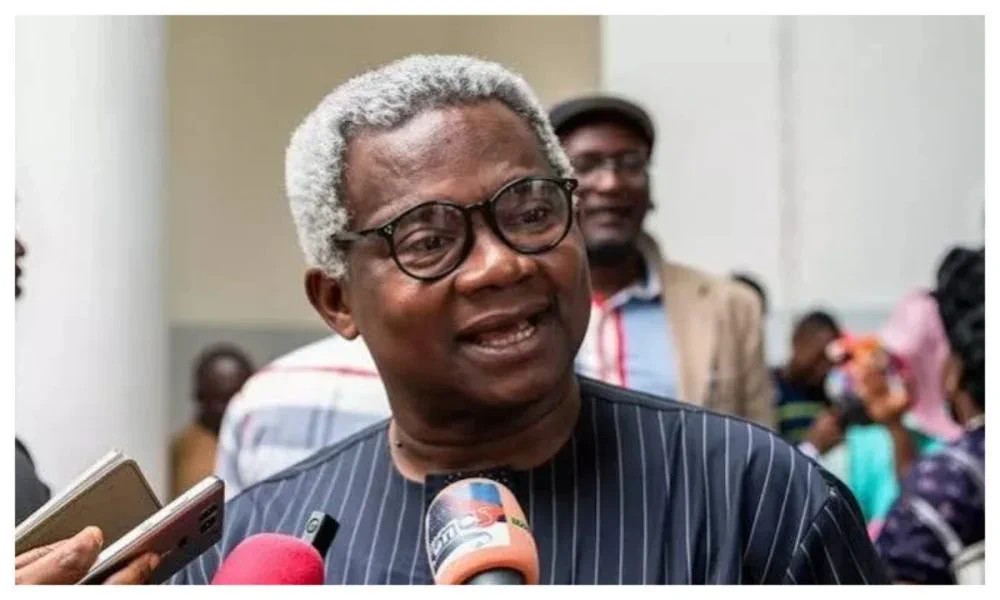
 Former President Goodluck Jonathan has raised a fresh alarm over Nigeria’s growing culture of post-election litigation. He warned that the increasing role of courts in determining political outcomes is actively weakening the country’s democratic foundations. Speaking on Tuesday at the 2026 Democracy Dialogue in Bauchi, Jonathan stated that the nation`s judicial dependency has created a highly unpredictable political environment.

THENEWSCREDIT reports that the former president described Nigeria’s electoral dispute system as a global anomaly. He noted that unlike other African democracies where elections are decisively resolved at the ballot box, Nigeria has institutionalised prolonged legal battles. "The Nigerian situation is extremely different from most other African countries," Jonathan remarked, adding that this trend heavily undermines the power of the ordinary voter.

To illustrate his point, Jonathan recalled a historical conversation with a former Deputy President of South Africa during his tenure as vice president. The foreign leader expressed deep shock that Nigerian politicians routinely head to court immediately after losing an election. Jonathan noted that while international peers view court battles as a last resort, Nigeria has normalized it as an official phase of the electoral cycle.

While advocating for judicial independence and impartiality, Jonathan lamented the sharp decline in public confidence regarding political judgments. He argued that while criminal offences committed during elections must be prosecuted, civil electoral disputes have become overly politicised. He suggested that for highly controversial cases, the judiciary should order a rerun rather than handpicking winners in a courtroom.

Jonathan also targeted the judiciary`s deep interference in the internal affairs of political parties, particularly disputes from party primaries. He expressed worry that judges now frequently determine valid party candidates and legal party leadership. This overreach, he argued, strips political parties of their primary constitutional responsibilities and creates systemic chaos.

THENEWSCREDIT further gathered that the dialogue concluded with Jonathan reminding stakeholders that democracy functions as an interconnected ecosystem. This delicate balance requires synchronised transparency from political parties, electoral bodies, security agencies, civil society, the media, and voters. He maintained that true democratic consolidation will only occur when Nigerians restore total confidence in the ballot box rather than legal technicalities.
ADVERTISMENT

You May Also Like