☰     THENEWSCREDIT
HOME BREAKING NEWS POLITICS METRO EDUCATION HEALTH SPORT ENTERTAINMENT OPINION VIDEOS SEARCH CONTACT

EDUCATION


EDUCATION /  Tue 07 Jul
Posted By; Akintayo Asamu

NABTEB Releases 2026 NCEE Results: 75% Score Above 50% Amid 47% Enrolment Slump

The National Business and Technical Examinations Board (NABTEB) has officially released the results of the 2026 National Common Entrance Examination (NCEE), recording a 75.29 per cent pass rate among participants. Announcing the development on Tuesday in Benin City, the Registrar and Chief Executive Officer of NABTEB, Dr. Mohammed Aminu Mohammed, revealed that 10,426 out of the 13,848 candidates who sat for the examination scored 50 per cent and above. Despite the commendable pass rate, the board recorded a worrying 47.74 per cent decline in student enrolment for technical education. Total registration plummeted from 29,260 candidates in 2025 to just 13,970 in 2026, signaling a sharp drop in interest in technical pathways. Dr. Mohammed noted that out of the total registered population, 13,848 candidates actually sat for the examination, while 1,442 candidates were recorded as absent. A closer look at the demographics shows a lingering gender gap, as males dominated the enrolment figures. Out of the total registered candidates, 10,638 were males (69.57 per cent) while 4,652 were females (30.43 per cent). This trend continued on exam day, with 9,632 males and 4,216 females ultimately sitting for the papers across 34 Federal Technical Colleges and 168 State Technical Colleges nationwide. The performance metrics highlighted outstanding brilliance, with 31 candidates (0.22 per cent) scoring an exceptional 96 per cent and above. Furthermore, 5,708 candidates (41.22 per cent) scored 70 per cent and above, while 3,422 candidates (24.71 per cent) fell below the 50 per cent benchmark. Among the successful candidates scoring above 50 per cent, 4,102 are seeking admission into Federal Technical Colleges, while 6,324 are bound for State Technical Colleges. The examination covered 28 technical trades grouped into five clusters: Mechanical, Electrical, Construction, Creative and Culinary, and Agricultural Technology. Traditional technical skills dominated student preferences, with Electrical Installation and Maintenance Practice recording the highest enrolment at 3,870 candidates. This was followed closely by Computer Hardware and GSM Repairs/Maintenance with 2,857 candidates, and Catering Craft Practice with 1,780 candidates. Conversely, emerging and niche skills suffered shockingly low patronage from applicants. Tiling and Cladding recorded the lowest interest with just one candidate, while the newly introduced Social Media Content Creation and Management trade drew only two candidates. Other modern sectors like Fish Farming recorded three candidates, Motorcycle Repairs drew five, Creative Media had six, and Automobile CNG Conversion registered nine. Dr. Mohammed stated that the examination was conducted under peaceful conditions and in strict compliance with the board’s quality assurance guidelines. To give more students access to technical education despite the low initial turnout, the Registrar announced that registration for a supplementary National Common Entrance Examination would commence before the end of July. Reacting to the general decline in enrolment, the NABTEB boss urged parents and guardians to aggressively encourage their wards to embrace Technical and Vocational Education and Training (TVET). He emphasized that the future of global work is driven by innovation and practical competencies, noting that technical colleges remain the surest pathway to self-reliance, entrepreneurship, and lifelong employment for young Nigerians.
EDUCATION /  Wed 01 Jul
Posted By; Akintayo Asamu

LAUTECH VC FACES BACKLASH OVER UNPAID SALARIES, CHILD`S CONTRACT

Tension gripped the campus of Ladoke Akintola University of Technology (LAUTECH) on Wednesday as non-academic staff staged a massive protest against the institution`s management. The aggrieved workers are demanding the immediate payment of outstanding salaries and an overhaul of poor working conditions. VC’s Order Sparks Outrage Videos circulating widely on social media show angry protesters accusing the Vice-Chancellor, Professor Kalilu, of ordering them to suspend their regular duties despite the non-payment of their wages. The workers expressed frustration over what they described as a total disregard for their welfare amid harsh economic realities. Nepotism and Labor Abuse Allegations Adding fuel to the crisis, the workers alleged that management directed them to work under a controversial external contract. They claimed the university awarded this contract to the Vice-Chancellor’s own child, a recent graduate who finished national service last year. According to the protesters, the contract enforces extreme working conditions, requiring staff to labor from 6:30 a.m. to 7:30 p.m. daily for a monthly wage of just ₦30,000. These severe allegations of nepotism and labor exploitation have not been independently verified. The LAUTECH university management has not yet issued an official response to the protests or the specific claims leveled against Professor Kalilu.
EDUCATION /  Wed 01 Jul
Posted By; Akintayo Asamu

Oyo Teachers End Strike, Return to Classrooms Thursday

Public primary and secondary school teachers in Oyo State will return to classrooms tomorrow, Thursday, July 2, 2026, following the suspension of their industrial action. THENEWSCREDIT reports that,the Nigeria Union of Teachers (NUT), Oyo State Wing, announced the decision on Wednesday after intense negotiations with the state government over recent security breaches. The strike was initially triggered by the abduction of teachers and pupils in the Oriire Local Government Area. The union agreed to shelve the action after receiving concrete security commitments from the state administration. Key agreements include the deployment of a joint task force to patrol school zones, sustained rescue efforts for abducted victims, and the provision of psychosocial rehabilitation and financial aid for affected families. Additionally, initiatives will be implemented to enhance infrastructure, such as fortified perimeters, alongside forest cleaning operations to dismantle criminal hideouts and regulate activities in forest reserves. The suspension followed a directive from the NUT national leadership after reviewing appeals from the state government and key stakeholders. The official statement was jointly signed by the Oyo State NUT Chairman, Hassan Ajibola Fatai, and the Secretary, Olukayode Salami. "The union suspended the action after the government assured us of intensified efforts to secure our schools and communities," the statement read. While praising teachers for their solidarity, the NUT urged educators to remain highly vigilant and report any suspicious activities immediately. The union stressed that it will continue to monitor government compliance to ensure the permanent safety of teachers and learners.
EDUCATION /  Wed 01 Jul
Posted By; Akintayo Asamu

LITERACY CRISIS: 75% of Nigerian Children Fail to Read by Age 10

The Federal Government has raised a national alarm over Nigeria’s deepening education emergency, revealing that three out of every four children at the basic school level cannot read or understand a simple sentence by age 10. The Minister of Education, Dr Olatunji Alausa, made the disclosure in Abuja during a high-stakes roundtable meeting on digital learning resources, jointly organized by the Federal Ministry of Education and the Universal Basic Education Commission (UBEC). Describing the statistics as "simply unacceptable," Dr Alausa warned that the country`s severe "learning poverty" requires an immediate, technology-driven intervention to prevent total collapse. "Learning poverty means that by the age of 10, a child cannot read and understand an age-appropriate text," Alausa explained to an audience of state education commissioners and State Universal Basic Education Board (SUBEB) chairmen. "In Nigeria today, three out of every four children are learning poor. We don’t have a choice anymore. We must deploy digital learning to every part of the country, including the most rural communities." The Minister stressed that manual teaching methods are no longer sufficient to close the widening gap, positioning e-learning as the definitive future of Nigerian education. The federal government expressed deep frustration over the poor utilization of existing digital infrastructure, which was heavily funded by taxpayers and international development partners. While the country counts an estimated 67 million learners across primary and secondary schools, the government`s flagship digital platform—the Nigeria Learning Passport (NLP)—has recorded just 2.3 million users. "This is still extremely low," the Minister lamented. "We have invested significant resources in these platforms. If they are not used, then it becomes a wasted investment. We cannot continue to suffer in the midst of plenty." Rather than replacing physical educators, Alausa clarified that platforms like the NLP, Inspire, Ignite, EduRevamp, E-Learn, and the Greenfield Learning Management System are built to complement classroom efforts. The virtual infrastructure offers curriculum-aligned lessons taught by top-tier educators, designed specifically to bail out schools suffering from acute shortages of qualified teachers in core subjects like Mathematics, English Language, Physics, and Chemistry. Under the proposed model, rural or understaffed schools can stream live or recorded virtual sessions, allowing students to interact with remote teachers in real-time. The Minister lauded the United Nations Children’s Fund (UNICEF) for its pivotal role in developing the Nigeria Learning Passport, noting that the platform proved its worth during COVID-19 lockdowns and remains vital for sustaining education in communities hit by insecurity and prolonged school closures.
EDUCATION /  Mon 29 Jun
Posted By; Akintayo Asamu

Preserve Heritage: Alausa Champions Indigenous Languages at Book Launch

Minister of Education, Dr. Tunji Alausa, has strongly advocated for the preservation of Nigeria’s indigenous languages. Speaking in Lagos at the unveiling of Yorùbá: A Tonal Language Homophones by Bankole Awosika, he noted that native languages are the bedrock of the nation`s history and cultural identity. Dr. Alausa emphasized that safeguarding Nigeria`s rich linguistic diversity goes far beyond mere communication. At the launch held at Moonstone Hall, Billings Way, Ikeja, he noted:"The preservation of our indigenous languages is not merely about communication; it is about preserving history, identity, knowledge systems, and our collective heritage." The newly unveiled publication by Awosika—a linguist with decades of scholarship—dives deep into the tonal structure of the Yoruba language. It provides practical breakdowns of pronunciation, vowels, consonants, and the cultural philosophy underpinning Yoruba expressions. Nigeria boasts over 500 indigenous languages, making it one of the most linguistically diverse countries globally. However, these traditions face the threat of extinction due to rapid urbanization and declining generational transmission. THENEWSCREDIT reports that,the Minister`s endorsement of cultural preservation comes amid shifting educational frameworks. The federal government recently reversed its mother-tongue instruction mandate in primary schools, opting instead to make English the sole medium of instruction in order to boost global competitiveness and standardized learning outcomes. Despite these curriculum changes, government officials and language advocates continue to stress that intellectual and community-level investments in native language books remain essential resources for protecting Nigeria`s linguistic traditions. Representatives from the Lagos State Ministry of Tourism, Arts and Culture, along with literary enthusiasts and the Awosika family, echoed these sentiments. They urged researchers, schools, and cultural organizations to adopt the new text as a valuable tool to keep future generations connected to their roots.
EDUCATION /  Fri 19 Jun
Posted By; Akintayo Asamu

Kwara bans school graduation over security threats.

The Kwara State Government has banned all public and private schools from hosting graduation, valedictory, or end-of-session ceremonies due to rising security concerns. The policy applies immediately to all educational institutions across the state. Government officials stated the measure is necessary to safeguard students and maintain order. The directive was issued via an official letter from the Ministry of Education and Human Capital Development. Mrs. Bunmi Osanupin, a director within the ministry, signed the order on behalf of the Commissioner, Dr. Lawal Olohungbebe. The state warned that school proprietors, principals, and headteachers must comply strictly. Institutions that violate the ban will face severe regulatory sanctions. The order was formally delivered to Prof. Raheem Adaramaja, Chairman of the State Universal Education Board (SUBEB). Authorities confirmed that the ultimate goal is ensuring decorum and safety within school premises during the session closure.
EDUCATION /  Wed 17 Jun
Posted By; Akintayo Asamu

Editorial: Security First—Saving Oyo’s Academic Future

1. The Lead Opinion The indefinite industrial action by the Nigeria Union of Teachers (NUT) is not merely a labor dispute; it is a profound indictment of the state`s security architecture. While the union is entirely justified in demanding better protections following the traumatic kidnappings in Oriire, the resulting collateral damage—idled children and compromised education—demands an immediate, multi-pronged resolution from the Oyo State Government. 2. Core Arguments & Stances Safety Over Syllabi: The government must stop viewing school security as an afterthought. Negotiating the end of the strike requires more than just standard salary talks; it requires concrete, visible security measures deployed to fortify public schools. Academic Compromise: Even if the strike were to end immediately, the syllabus is severely compromised. The looming rush to cover academic ground will heavily disadvantage public school students, widening the gap between them and their privately educated peers. The Burden on Working-Class Families: With public schools completely shut down, working parents in urban centers like Ibadan are facing an impossible choice. Many are forced to leave toddlers under loose supervision or expose impressionable youths to street hawking to supplement family incomes. 3. Key Recommendations Immediate Deployment: Government must immediately establish visible security patrols and perimeter fencing around vulnerable rural and semi-urban schools to restore confidence. Palliative Academic Planning: The Ministry of Education must redesign the term calendar to realistically accommodate the lost weeks, preventing teachers from rushing the syllabus. Emergency Childcare Support: Until schools resume, local government authorities must collaborate with community leaders to create safe, structured civic spaces and localized daycares for younger children. The Ministry of Education must pivot to active, structured intervention to secure schools and salvage the academic year, prioritizing infrastructure audits for security, curriculum compression, and the establishment of community-based safe learning hubs. Additionally, the plan calls for utilizing broadcast-based distance learning, deploying mobile counseling units for trauma support, and restructuring academic calendars for catch-up instruction. For detailed actionable recommendations, consult the Ministry of Education.
EDUCATION /  Wed 17 Jun
Posted By; Akintayo Asamu

CLASSROOMS DESERTED, STREETS FULL:Oyo Parents Panic As Indefinite Teachers’ Strike Leaves Pupils Idle

A cloud of uncertainty hangs over the future of public education in Oyo State as the indefinite strike embarked upon by the Nigeria Union of Teachers (NUT) enters a critical phase, leaving classrooms deserted and parents in a state of panic. The industrial action, which commenced on June 1, was triggered by the traumatic May 15 abduction of teachers and pupils in the Oriire Local Government Area. While the strike serves as a protest against worsening insecurity, its immediate fallout is being felt most acutely on the streets, where thousands of school-age children have now been left idle. Academic Calendar Disrupted The timing of the strike has amplified the anxiety of education stakeholders. Schools were shuttered just as pupils and students were preparing to commence their continuous assessment exercises. Veteran educators warn that even if the strike is called off immediately, the academic calendar has been severely compromised. Resuming schools will likely force teachers into a frantic rush to cover the syllabus, heavily disadvantaging students. Parents Resort to Desperate Measures With public schools completely shut down, working-class parents in Ibadan are struggling to keep their children safe and productive. In neighborhoods like Mokola and Total Garden, children are increasingly seen roaming the streets or hawking goods to supplement family incomes. Some parents in Nalende have hurriedly enrolled their children in tailoring and other vocational apprenticeships just to keep them supervised. In areas like Yemetu, residents have formed informal neighborhood clusters to watch over groups of children while their parents are at work. The most vulnerable demographic remains children between the ages of three and seven. Too young for vocational training, these toddlers are frequently left under the loose supervision of neighbors or completely unattended. A Call for Urgent Government Action While some teachers have criticized parents for a lack of vigilance during the crisis, the consensus among residents is that the ultimate responsibility lies with the state. Distressed parents are urging the Oyo State Government to urgently intensify negotiations with the NUT. Stakeholders emphasize that resolving the strike permanently will require more than just salary talks; the government must deploy visible, concrete security measures to fortify public schools against further insurgent attacks.
EDUCATION /  Sun 07 Jun
Posted By; Akintayo Asamu

Beyond the Battlefield: Why Education Remains Nigeria`s Key to Lasting Peace — Gov Sani, Defence Minister, CAN

The Minister of Defence, General Christopher Musa (rtd), and the Kaduna State Governor, Senator Uba Sani, have endorsed President Bola Tinubu’s education sector reforms for improving the quality of education in the country. They argued that citizenship and community cooperation with security agencies through education are critical tools in the fight against banditry, terrorism and other security challenges confronting the country. Both spoke during the unveiling of the Kaduna Christian Academy, a faith-based school built for the Kaduna Christian community by friends of the Director-General of the Department of State Services (DSS), Mr Oluwatosin Adeola Ajayi. It would be recalled that friends of the DSS boss had, in May 2025, built an Islamic school for the Muslim community in Danbushiya, Chikun Local Government Area of the state. Describing the academy as a strategic non-kinetic intervention, the Defence Minister said national defence extends beyond military deployments, intelligence gathering and air power, stressing that lasting security can only be achieved through the defeat of ignorance and hopelessness. “When we speak of national defence, the instinct is to focus on boots on the ground, air power or intelligence gathering. However, true and lasting security is anchored on one critical element: the defeat of ignorance and the conquest of hopelessness. This school is a weapon of mass instruction in the right hands,” he said. Musa commended the DSS for complementing its traditional security role with community development initiatives, noting that the agency had demonstrated that internal security is not only about surveillance and arrests but also about winning public confidence and building a better future. He said an educated and enlightened population offers a stronger defence against extremism, criminality and social instability than force alone, adding that the school would provide children with academic knowledge, critical thinking skills and sound moral values. The minister urged parents to prioritise their children’s education, recalling his humble background and stressing that every child possesses the potential to rise to the highest positions in society through hard work, education and divine grace. He noted that Kaduna State had recorded significant improvements in security and governance through the combined efforts of the Federal, State and Local Governments. He commended Governor Sani for promoting inclusion, development and peaceful coexistence. Musa also praised the resilience and peaceful disposition of the people of Southern Kaduna, urging them to resist attempts by divisive elements to undermine unity and harmony in the area. He explained that security agencies alone cannot defeat bandits and terrorists without the support of citizens. The minister warned that criminal groups usually rely on local collaborators for information, logistics and other assistance. “If we keep quiet, they will continue to destroy us. But if we speak out, they will not have any space to survive,” he said, urging residents to provide timely and credible intelligence to security agencies. He maintained that while military operations remain necessary, non-kinetic measures such as education, community engagement and social development are equally vital to securing lasting peace, noting that a literate society is better able to reject extremist ideologies and support security efforts. Musa described the academy as a symbol of interfaith harmony and national unity, urging the management, teachers and community leaders to protect the facility, maintain high academic standards and encourage civic participation, including voter registration and active involvement in the democratic process. This was even as the Kaduna State Government reaffirmed its commitment to expanding access to quality education, describing investment in learning as critical to the state’s future development. Governor Sani made the declaration through the State Attorney General and Commissioner for Justice, James Kanyip. “Education remains one of the most powerful tools for personal, human capital and social development. Every classroom built creates opportunities for learning. Every child educated strengthens our communities. And every investment in education contributes to a more prosperous future for our state and the nation,” he said. Kanyip said the commissioning represented more than the opening of a new structure, describing it as a symbol of hope and opportunity. “Today, we are not merely opening a new building. We are celebrating hope, opportunity and transformation,” he stated. In his welcome address, Chairman of the Christian Association of Nigeria for the 19 Northern States and the FCT, Rev. John Joseph Hayab, said the DSS boss facilitated the project in recognition of education as one of the most effective tools for tackling insecurity, poverty and social challenges in Nigeria. “Today is more than the opening of a school building. Today is the opening of doors to opportunity, doors to knowledge, doors to growth and a brighter future for our children,” he said. Chief Imam of Sultan Bello Mosque, Kaduna, Prof. Suleiman Adam, who gave a goodwill message on behalf of the Muslim community, appreciated the DSS DG for replicating what he did for Muslims by also establishing a school for Christians. He described the move as a major boost for the promotion of interfaith harmony. Speaking on behalf of the friends of the Director-General of the DSS, Malam Musa Suleiman said education remains one of the most effective tools for addressing the root causes of insecurity.
EDUCATION /  Thu 04 Jun
Posted By; Akintayo Asamu

Tragic Accident and Severe Logistics Failures Disrupt 2026 WASSCE in Ogbomoso.

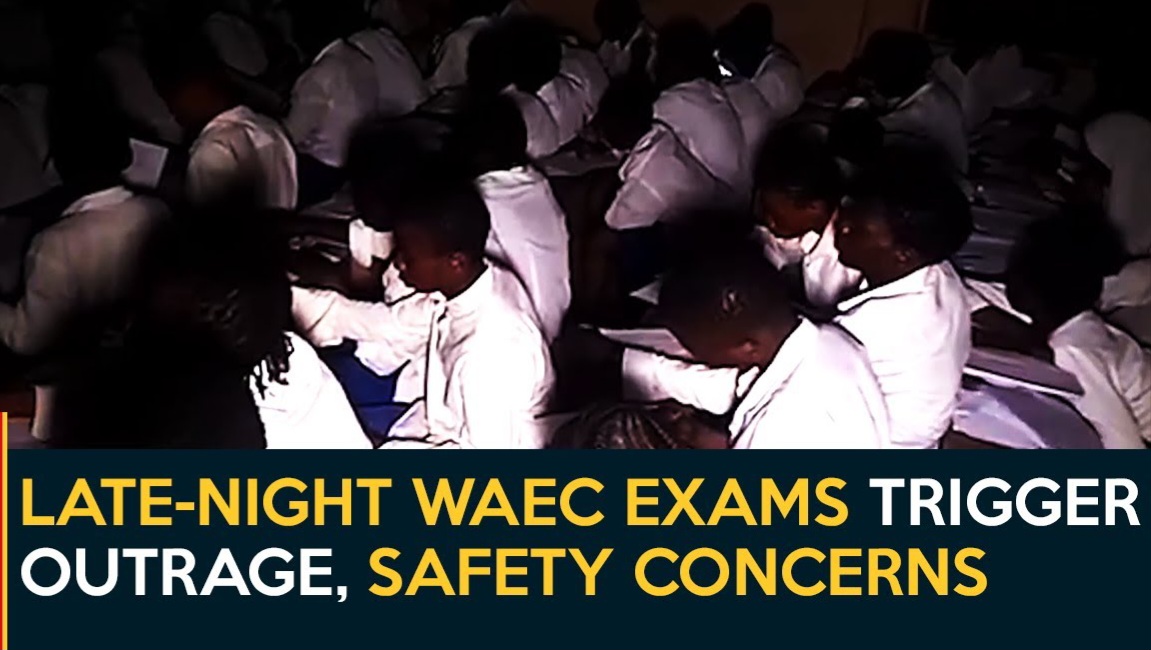
Severe logistics delays, a tragic road accident, and escalating security anxieties disrupted the ongoing West African Senior School Certificate Examination (WASSCE) across several secondary schools in Ogbomosoland on Thursday, June 4, 2026, leaving students stranded well into the night. The crisis escalated when Art students, who began their examinations earlier in the day, were forced to write their papers under irregular conditions, only concluding at 7:30 p.m. The unprecedented nightfall extension triggered widespread panic among parents and guardians, many of whom stormed school premises after their children failed to return home from the morning sessions. While the Art students finished late, Science students faced an even harsher ordeal. Teachers, candidates, and anxious parents remained trapped on school grounds waiting for the Agricultural Science practical examination materials. As darkness fell, West African Examinations Council (WAEC) officials were nowhere to be found, with sources citing a volatile security situation within Ogbomoso and its surrounding communities. Fearing for the safety of the stranded youngsters and educational staff, frantic parents made urgent appeals to law enforcement and security agencies to deploy personnel to the affected secondary schools. Community stakeholders sharply criticized WAEC`s handling of the situation, questioning why the regional examination body failed to reschedule the papers earlier. Tragic Accident Confirmed as Root Cause WAEC authorities later disclosed that the massive delay was caused by a severe road accident involving the examination officers who were transporting the question papers. In a heartbreaking development, THENEWSCREDIT reports confirmed that some WAEC officials, while carrying out their official duties on Thursday, were involved in a tragic motor accident. According to available information, three WAEC staff members reportedly lost their lives in the unfortunate incident. This fatal accident is the primary reason for the severe delays experienced in the conduct of examinations across the region. Several entities extend their heartfelt condolences to the management of WAEC, the families of the deceased, and the entire WAEC community during this difficult time. May Almighty God grant the departed eternal rest and give their loved ones the strength to bear this painful loss. 🕊️ May their souls rest in perfect peace. Amen. The agonizing wait finally ended when school authorities announced that the Agricultural Science practical examination had been postponed indefinitely due to the tragedy. Distraught parents have called on the government and WAEC to review security measures and logistics to prevent a recurrence of events that put student lives at risk.
Page 3 of 137


Home   About Policy Contact

2026  ©
Developed by KITE